


MENA.click editorial visual · 2026.
Palma de Mallorca is often treated as the airport you pass through on the way to somebody else’s beach. That is increasingly the wrong way to read the island. Palma has matured into one of the Mediterranean’s strongest city breaks in its own right: a walkable historic center, serious boutique hotels, a food scene that moves easily between old bakeries and contemporary dining, good urban beaches, design shops, museums and a waterfront that keeps the city visually connected to the rest of Mallorca.
Google’s 2026 travel data gives the destination fresh momentum. Palma appeared among the international summer destinations seeing strong year-over-year search growth, while Port de Sóller was the top-trending Palma beach town in recent searches and “beach clubs Mallorca” became a breakout query. The useful interpretation is not that you should spend four days moving from one beach club to another. It is that interest in Mallorca is broadening — and Palma is the best base for combining the island’s urban life with the coast and the Serra de Tramuntana.
Palma is becoming the city break Mallorca always had the potential to be
The island’s beach reputation is not disappearing; Palma is simply giving travelers more reasons not to leave the capital immediately after landing.
One of the Mediterranean’s great old quarters
Visit Palma describes the historic center as one of the largest and best-preserved old quarters in the Mediterranean and Europe. Its value is in the texture: medieval lanes, manor-house courtyards, Gothic stone, Modernisme façades and small squares rather than one single monument.
Markets and bakeries still matter
Palma’s food culture is not a hotel-resort invention. Municipal markets, traditional bakeries, ensaïmada, llonguet sandwiches and Mallorcan dishes remain visible inside the modern restaurant scene.
The boutique-hotel market is unusually strong
Historic townhouses have become polished small hotels without removing Palma from everyday city life. That creates a premium travel market that feels urban and local rather than isolated behind a resort gate.
The capital works as a launch point
Palma gives you easy access to the airport, intercity buses, the historic Sóller railway and the rest of Mallorca. You can have cathedral mornings and mountain-village afternoons without changing hotels.
Choose between high-summer energy and shoulder-season elegance
Palma works year-round, but the experience changes sharply depending on whether the city is functioning as a summer capital or a Mediterranean city break.
The easiest all-round window
Longer days, active terraces and beach weather arrive without the intensity of peak August. It is an excellent period for travelers who want to walk the old town and still spend part of the trip beside the water.
Maximum energy, maximum demand
Summer is built for beach days, rooftops and late dinners, but central Palma and popular island destinations are busy. Reserve important restaurants and premium hotel categories ahead of time and plan outdoor sightseeing earlier in the day.
Our premium city-break pick
The sea remains appealing while the city becomes easier to inhabit on foot. For advertisers targeting couples, gastronomy and upscale short breaks, this is arguably Palma’s strongest period.
Palma is compact, but the neighborhood still changes the trip
Choose by evening atmosphere and walking pattern, not by which hotel appears first in a search result.
Old Town · La Seu · Cort
Best for travelers who want Palma’s architecture immediately outside the door. You are close to the cathedral, Almudaina, courtyards, galleries and historic streets. The trade-off is that centuries-old buildings can mean smaller rooms, irregular layouts and limited vehicle access.
Santa Catalina
Visit Palma calls it one of the city’s essential dining and nightlife districts. The market anchors the neighborhood while Carrer Fàbrica, Sant Magí and the surrounding streets fill with restaurants, cafés and bars. Stay here if dinner matters as much as monuments.
La Lonja · Born · Jaume III
A strong premium compromise between historic Palma and modern shopping. You can walk to the cathedral, Santa Catalina and the waterfront while staying close to Passeig des Born and Avenida Jaume III.
Portixol · Es Molinar
Choose the eastern waterfront when morning runs, sea views and long lunches matter more than sleeping beside the cathedral. The atmosphere is more residential and coastal, with Palma’s center still within easy reach.
6 highly rated Agoda hotels in Palma de Mallorca
Six premium stays selected for location, style and strong Agoda guest feedback. Hotel photos load only when the article opens, so they do not slow the WordPress import.
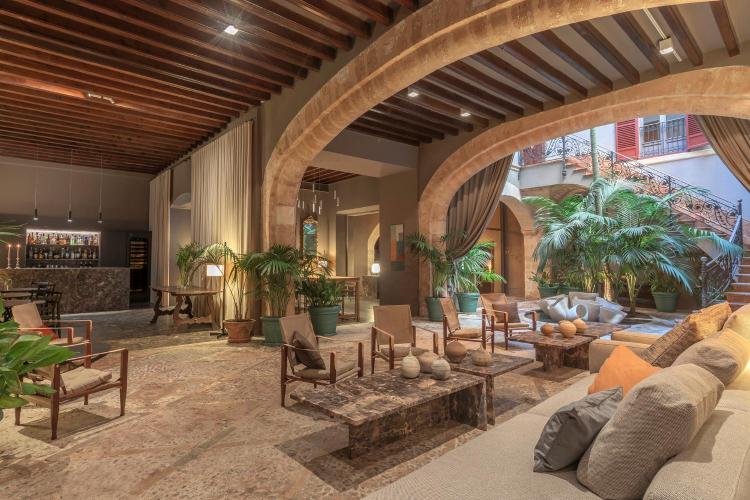
Can Cera Hotel
Historic five-star townhouse luxury in Palma’s Old Town, with exceptional location, cleanliness and service scores.

Hotel Cappuccino – Palma
A colorful design-forward five-star hotel on Plaça de Cort, ideal for travelers who want the historic center directly outside the door.

Can Bordoy Grand House
An intimate historic-house hotel near La Lonja with a lush garden, pool and exceptional central location.

El Llorenç Parc de la Mar
Contemporary five-star luxury beside Parc de la Mar, with rooftop and wellness facilities close to the cathedral and old walls.

Nakar Hotel
A polished design hotel on Avenida Jaume III with rooftop facilities and easy walking access to Old Town and Santa Catalina.
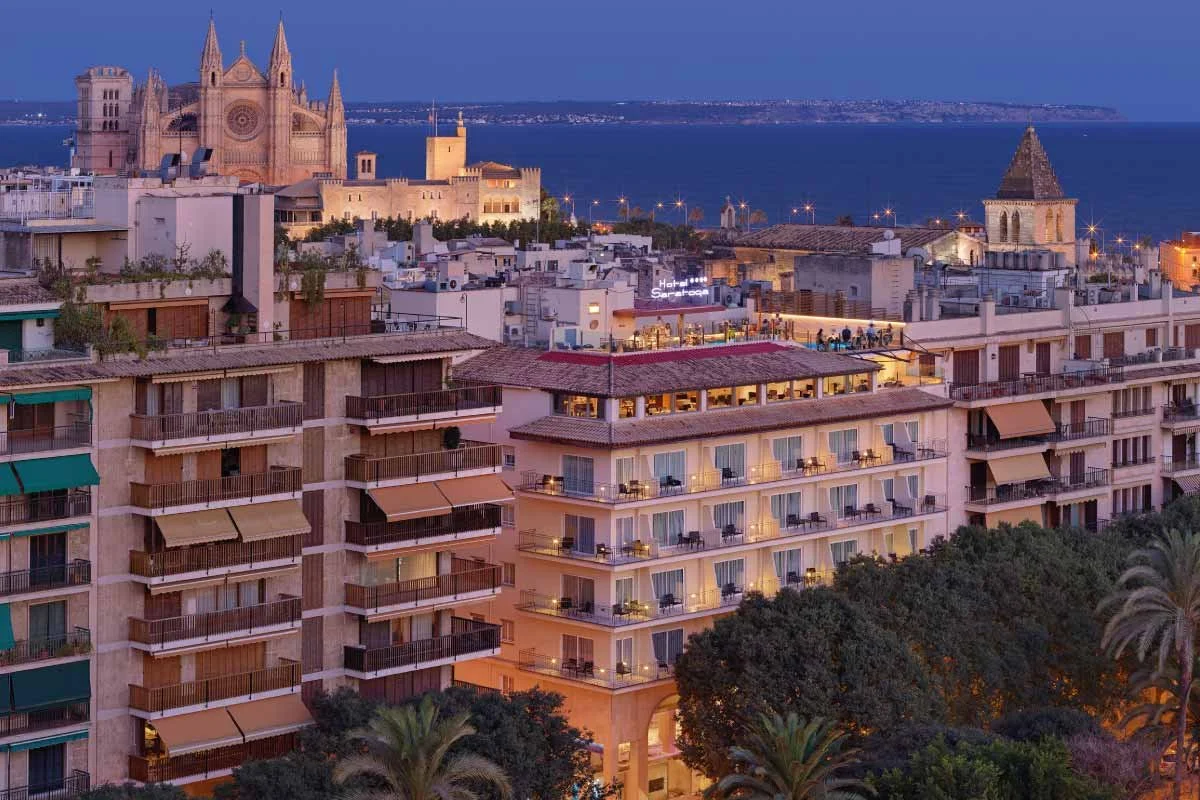
Hotel Saratoga
A well-established upscale option near Es Baluard and Santa Catalina, backed by thousands of Agoda reviews.
MENA.click may earn a commission when you book through Agoda links on this page.
Ratings are publication-date snapshots; prices and availability can change at any time.
What to do in Palma when you want more than a beach weekend
Start with the cathedral, then let the city widen around it.
See La Seu from the water side before going inside
The Cathedral of Mallorca dominates Palma’s skyline because of where it stands as much as how it was built. Approach through Parc de la Mar, then visit the interior when opening hours suit your day. The relationship between the cathedral, the Almudaina Palace and the old walls is the essential first chapter of Palma.
Get deliberately lost in the old quarter
Visit Palma’s official route encourages exactly that. Move away from the busiest shopping streets and look for courtyards, Plaça de Cort, Can Balaguer, Modernisme façades, old bakeries and the former Jewish quarter around Monti-Sion.

MENA.click editorial visual · 2026.
Cross from history into contemporary art
Es Baluard uses Palma’s historic defensive walls as the setting for modern and contemporary art. The Joan Miró Foundation farther west preserves Miró’s studios and provides a more intimate look at the artist’s later creative life in Mallorca.
Go up to Bellver for the shape of the bay
Bellver Castle’s circular Gothic form is unusual, but the larger reward is orientation. From the hill, Palma reads as a city wrapped around a broad bay rather than a cluster of streets behind the cathedral.
Walk the waterfront without turning it into transit
Palma’s seafront is changing, but its basic pleasure is simple: long light, marina views and enough distance from the old-town lanes to reset the pace of the day. Continue east toward Portixol when you want the city to feel more residential.

MENA.click editorial visual · 2026.
Palma’s premium food story begins in bakeries and markets
The city has more than enough contemporary dining for a luxury weekend, but its identity is easier to understand when you start with the products that locals have been eating for generations.
Do not save it for the airport box
Visit Palma treats the spiral pastry as an essential culinary treasure, with regulated production under its geographical indication. Try a plain ensaïmada first, then explore filled versions. The classic experience is a bakery table, coffee and enough time to eat it fresh.
Palma’s local sandwich bread
The small white roll is typically lightly toasted and can be filled with tomato, olive oil, ham, cheese, tuna or sobrassada. It is exactly the kind of everyday local food that premium travel articles too often ignore.
Tumbet, frit and pa amb oli belong on the list
Traditional Mallorcan cooking leans on vegetables, olive oil, pork, bread and seafood. Try the famous dishes, but also ask what is seasonal rather than ordering only from a pre-written checklist.
Santa Catalina and l’Olivar serve different moods
Santa Catalina combines produce stalls with an increasingly cosmopolitan restaurant scene. Mercat de l’Olivar is more central and makes an efficient lunch stop while exploring the old city and shopping streets.
Port de Sóller is the 2026 side trip with real search momentum
Google identified Port de Sóller as the top-trending Palma beach town in recent searches. It also happens to be one of the easiest day trips to build from the capital without renting a car.
Take the historic train and tram
The wooden Tren de Sóller runs from Palma through the Tramuntana landscape to Sóller, where a historic tram continues to the port. Current official pricing lists a Palma–Port de Sóller–Palma combined train-and-tram journey at €40; schedules are seasonal, so verify the exact day before leaving.
Use TIB bus 204 when time matters
The 2026 TIB timetable connects Palma’s Estació Intermodal with Sóller and Port de Sóller throughout the day. It is less theatrical than the train but often more flexible for travelers who want a later start or a quicker return.
A Palma itinerary that leaves room for the island
The first three days stay city-focused. Day four uses the destination’s strongest 2026 search trend without turning the trip into a transportation marathon.
Cathedral, courtyards and the old city
Morning: Start at Parc de la Mar and La Seu, then move through the Almudaina area and old streets around Cort.
Afternoon: Find Can Balaguer, Modernisme details and a traditional bakery. Keep the route mostly on foot.
Evening: Dinner around La Lonja or Born, then one slow walk back through the lit historic center.
Markets, Santa Catalina and contemporary Palma
Morning: Start around Mercat de l’Olivar or central shopping streets, then visit Es Baluard.
Afternoon: Move into Santa Catalina for the market, boutiques and cafés. This is the day to take the itinerary less literally.
Evening: Stay in Santa Catalina for dinner and drinks rather than commuting back across Palma.
Miró, Bellver and the water
Morning: Visit the Miró Foundation or Bellver Castle depending on your interests.
Afternoon: Return toward the bay and walk east along the waterfront toward Portixol.
Evening: Choose a serious restaurant or long waterfront dinner. This is the right night for the reservation you made before arriving.
Sóller and Port de Sóller
Morning: Take the historic train or TIB bus to Sóller. Walk the town before continuing to the port.
Afternoon: Lunch by the water, then allow genuine unstructured time rather than trying to add Deià and Valldemossa to the same day.
Evening: Return to Palma for a final bakery stop, rooftop drink or dinner near your hotel.
Palma is easier without a car until the moment you want the whole island
For a city-focused stay, walking and public transport are usually more useful than parking.
EMT A1 connects the airport with Palma center
Aena lists route A1 for the airport–Palma center connection and A2 for S’Arenal. This is the simplest public-transport option for many central hotels.
Temporary airport bus-stop relocation
As of publication, Aena says the EMT and TIB drop-off stop outside departures is temporarily relocated from 20 August to 19 September 2026 because of building work. Check signage on the day rather than relying on an old airport map.
Walk the center
Old Town, La Lonja, Born and Santa Catalina are close enough that a car becomes friction. Taxis and buses cover the longer jumps to Miró, Bellver, Cala Major and other outer districts.
Rent a car only when the itinerary earns it
If your trip expands into remote coves, mountain villages or several rural stops in one day, a car becomes useful. For Palma + Sóller alone, it is not essential.
Stay in Palma long enough to stop calling it “the city before Mallorca”
Palma works because it does not force travelers to choose between culture and leisure. You can begin with Gothic stone, eat lunch in a market, check into a design hotel, walk beside the Mediterranean and still be on a train toward the Tramuntana mountains the next morning.
The beach-club searches may be booming in 2026. Palma’s stronger story is that the city gives the rest of Mallorca context — and increasingly deserves several days of the trip for itself.